


Keywords: Dual Advantages, Regional Integration, Investment Momentum
The Johor–Singapore Special Economic Zone (JS-SEZ) is rapidly emerging as a unique and attractive investment destination, drawing companies that might not have considered investing in Johor or Singapore individually. By integrating the strengths of both regions, the zone offers businesses a more compelling value proposition and broadens investment opportunities.
At the Asia Forward-looking Summit held at the Ritz-Carlton Millenia Singapore, several participants noted that the JS-SEZ not only creates broader opportunities for foreign investors but also prompts companies in Singapore and Malaysia to rethink their regional expansion strategies.
Esther Teo, Head of the JS-SEZ Project Office under the Singapore Economic Development Board (EDB), stated that the initiative allows organizations to engage with a wider range of companies, especially those that had not previously considered investing in Johor or Singapore. By integrating the two markets into a single special zone, the JS-SEZ enhances its attractiveness and opens new business pathways for companies, contributing to the development of the bilateral economy.
In the first half of 2025, Johor attracted investments totaling as much as MYR 56 billion (approximately SGD 17.2 billion), with a significant portion credited to the JS-SEZ initiative. Lee Ting Han, Chairman of Johor’s Investment, Trade, Consumer Affairs, and Human Resources Committee, remains optimistic about the investment momentum in the third quarter and expressed confidence in reaching an investment target of MYR 100 billion by the end of 2025.
Lee Ting Han also pointed out that companies in Singapore and Malaysia should shift away from a traditional export-oriented mindset. He believes that now is the time to focus on the ASEAN market, especially given the region’s growing population, which will unlock greater potential in the domestic market. The development of the JS-SEZ provides an ideal platform to drive this strategic transformation, promoting regional integration and economic diversification.
Q&M Dental Group, headquartered in Singapore, is one of the companies actively expanding within the JS-SEZ. Dr. Ng Chin Siau, the group’s founder and CEO, shared that the company recently raised USD 130 million to support its expansion in Singapore, Johor, and China. In Malaysia, Q&M operates a total of 37 outlets, with 17 located in Johor and 9 within the JS-SEZ.
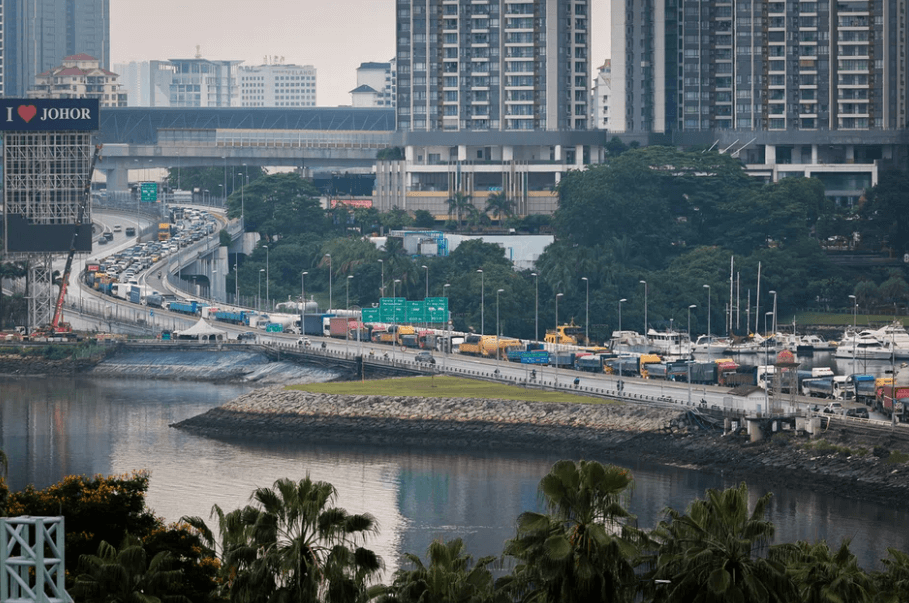
Dr. Ng stated that southern Johor will become a key region for the group’s future development. Its clinics not only serve local residents in Johor but also attract patients from other parts of Malaysia and Singapore. He specifically highlighted the upcoming Johor–Singapore Rapid Transit System (RTS Link), a major infrastructure project that will significantly improve cross-border commuting convenience and further expand the group’s service coverage.
Tan Chor Sen, CEO of OCBC Malaysia, pointed out that the JS-SEZ’s proximity to Singapore, a global financial hub, is a crucial factor in attracting international investors. He revealed that among the companies interested in expanding into the zone, approximately 50% are from China, further underscoring the JS-SEZ’s growing international appeal.
Hasni Mohammad, Johor’s Economic and Investment Advisor, emphasized that Singapore and Johor have complementary functional advantages. He suggested that multinational companies could establish their headquarters and R&D centers in Singapore while locating manufacturing operations in the lower-cost Johor, thereby maximizing supply chain and operational efficiency.
To support this strategic direction, several facilitative measures have been implemented to enhance the business environment in the JS-SEZ. Esther Teo noted that the Invest Malaysia Facilitation Centre in Johor assists companies in coordinating matters between federal and state authorities, reducing bureaucratic hurdles. At the same time, the EDB is collaborating with relevant Malaysian agencies to develop a high-quality talent pool to meet the workforce needs of resident companies.
Teo emphasized that, within the EDB’s capacity, proactive steps are being taken to improve overall business conditions, with the aim of significantly enhancing the value proposition of the JS-SEZ.
Related Resources
No results found.