


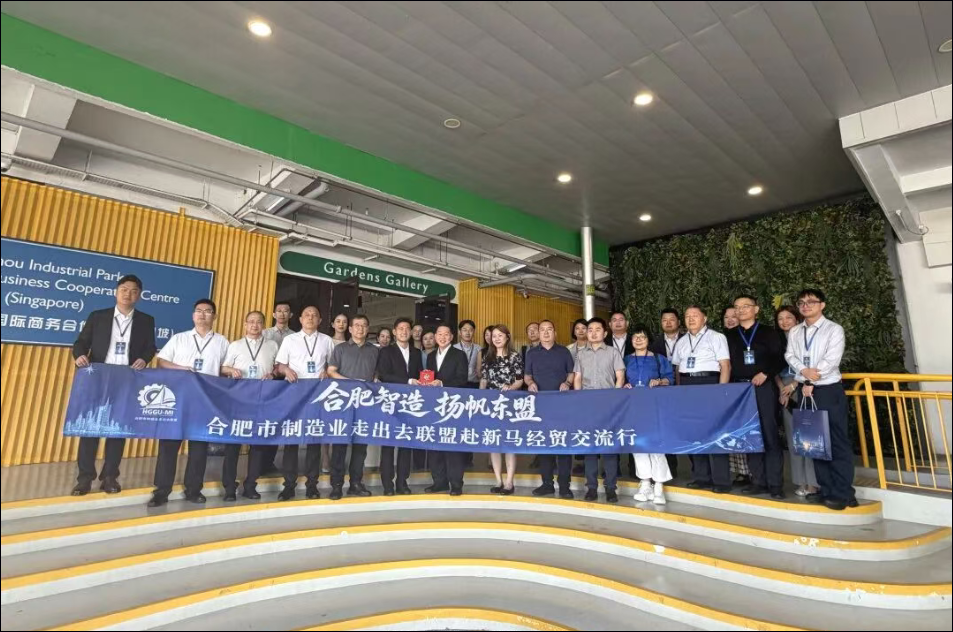

Keywords: Overseas expansion of construction, Belt and Road Initiative-driven, Singapore as a springboard, technology empowerment
In recent years, Chinese construction companies have been rapidly expanding overseas, significantly accelerating their “going global” efforts. These companies actively promote the “China Construction” brand internationally, and their overseas operations are characterized by scale, diversification, and high-quality development.
Why do construction companies choose to expand overseas?
The overseas expansion of Chinese construction companies is not the result of a single factor, but rather the inevitable outcome of multiple forces acting together, including national-level strategic planning, structural opportunities in the global market, the companies’ internal development needs, and cutting-edge technological innovations.
From the continued advancement of the Belt and Road Initiative, to the competitive pressures of the domestic market, and the empowerment provided by digital and green technologies, these factors together form a powerful driving force propelling the “China Construction” brand onto the global stage.
The Belt and Road Initiative continues to provide strong guidance
Since its inception, the Belt and Road Initiative has consistently served as the core driving engine for the overseas operations of Chinese construction companies. In recent years, as the initiative has entered a new stage of high-quality development, its guiding role has become increasingly prominent. The initiative has not only directly generated a large number of infrastructure projects across countries along the route—spanning transportation, energy, communications, and water conservancy—but also, through intergovernmental cooperation mechanisms, created favorable political and commercial conditions for Chinese companies to participate in these projects.
“Comprehensive Reform of State-Owned Enterprises” Guides Overseas Expansion
This year’s Government Work Report outlined three key tasks for the reform and development of state-owned enterprises (SOEs), the first of which is to successfully implement the high-quality deepening and upgrading of SOE reforms. For leading domestic central SOEs in the construction sector, such as China State Construction, China Communications Construction, and China Railway Construction, overseas expansion is a core component of their long-term internationalization strategies. In this round of deepened reforms, these companies are expected to systematically cultivate target markets through measures such as localized operations and the acquisition of high-quality overseas enterprises—a strategy often referred to as “going abroad by borrowing a ship.”
Technological Innovation Empowers Overseas Project Management
The application of digital and green technologies, exemplified by Building Information Modeling (BIM), has profoundly transformed traditional construction practices. BIM technology creates three-dimensional digital models that integrate information across the entire project lifecycle, enabling collaborative management of design, construction, and operations. It offers significant value in improving coordination efficiency, optimizing design and construction processes, and enhancing risk management.
For example, in the Kuala Lumpur 106 Exchange Tower project undertaken by China State Construction Malaysia, BIM played a key role in multi-party coordination, detailed design of construction nodes, and construction simulation. Although Chinese companies still have room to deepen their use of BIM technology, its enormous potential to improve management efficiency and meet international standards in overseas projects has already been widely recognized.
New Demands and Opportunities Arising from the Evolving Market Landscape
On one hand, the domestic market is becoming increasingly saturated, with competition intensifying and profit margins continuously being squeezed. Overall, China’s construction industry is undergoing a phase of “slower growth with higher quality,” marked by structural adjustments, a slowdown in industry growth, and even contraction in some segments.
On the other hand, emerging economies in Asia, Africa, the Middle East, and Latin America are experiencing rapid urbanization, industrialization, and population growth, creating strong demand for infrastructure in transportation, energy, housing, and municipal services. The infrastructure gaps in these emerging markets provide a solid demand base and historic opportunities for the overseas expansion of Chinese construction companies.
Leveraging their comprehensive strengths in cost control, construction efficiency, and technological capability, Chinese construction firms are well-positioned to meet these market demands and secure advantageous positions in international competition.
The Construction Market in Singapore and Southeast Asia
As a key hub on the Maritime Silk Road, Singapore, with its strategic location, favorable environment, and trade convenience, has become the first stop and stronghold for many Chinese construction companies expanding overseas.
Situated by the Strait of Malacca, Singapore is within a four-hour reach of major Southeast Asian cities. It serves as a transportation hub connecting Asia, Oceania, and Europe, as well as a gateway for construction companies entering the ASEAN market.
By investing in neighboring markets such as Indonesia and Malaysia through Singapore, companies can benefit from investment protection agreements and reduce political risks. Singapore, as one of Asia’s and the world’s major financial centers, and a key offshore RMB settlement hub, hosts over 500 financial institutions, providing enterprises with convenient financial services.
Currently, aside from Singapore, urbanization rates in other Southeast Asian countries remain relatively low, leaving significant room for growth and creating substantial infrastructure demand. The Regional Comprehensive Economic Partnership (RCEP), which came into effect in 2024, along with other regional cooperation agreements, provides policy incentives and trade facilitation for regional economic collaboration.
In addition, Singapore’s construction industry has shown strong growth momentum and undergone significant structural transformation in recent years. Driven by both large-scale public infrastructure and private projects, total industry demand is expected to reach historic highs. According to the Building and Construction Authority (BCA) of Singapore, the total value of construction contracts awarded in 2025 is projected to reach SGD 47–53 billion (approximately RMB 258–291 billion).
Conclusion
In today’s rapidly changing global economic landscape, the “going global” strategy for Chinese construction companies has shifted from being an optional choice to a necessary one. Choosing Singapore as an overseas base is not merely about capturing a single market. Its deeper strategic significance lies in:
- Leveraging Singapore as a “springboard” to radiate into the wider region;
- Utilizing its favorable “environment” to reduce risks and learn the rules;
- Harnessing its “platform” to build brand recognition and attract talent.
This represents an efficient strategic path from “China Construction” to “world-class” status. Although challenges remain, the long-term strategic value it offers makes it a crucial step in the global expansion of Chinese construction companies.
Related Resources


No results found.